A workspace for each department
We configure document structures, search, forms and workspaces. Finance, HR and contract teams can use the same platform with views and information suited to their work.
We implement ELO, connect it to other systems and develop extensions. From the first design to ongoing support, we work on both the platform and the processes it serves.
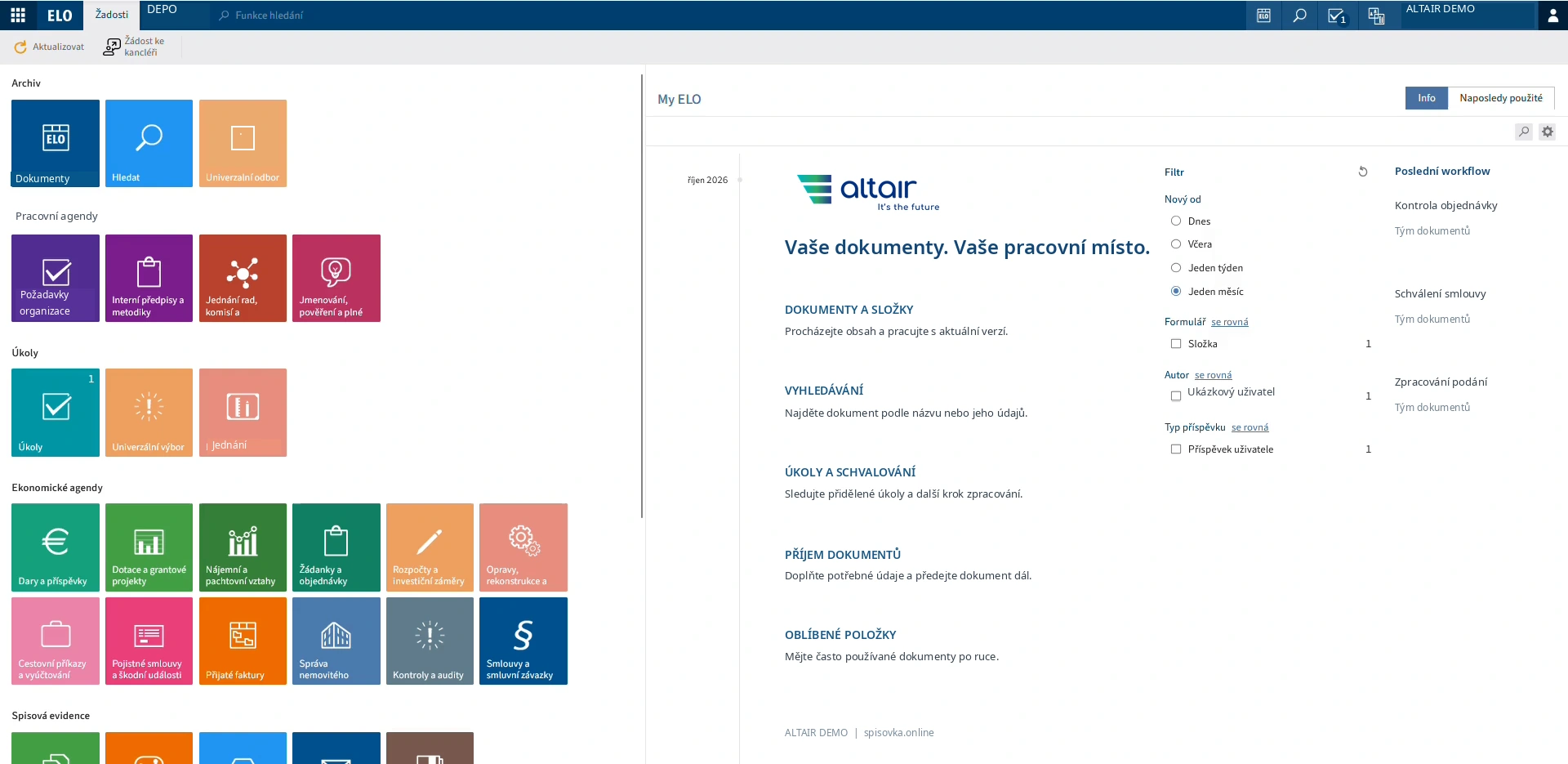
We configure document structures, search, forms and workspaces. Finance, HR and contract teams can use the same platform with views and information suited to their work.
Metadata models and aspects organise document information and relationships. We design shared data structures for reuse across applications, integration and future development.
We use workflows for user tasks and decisions, and ELO Flows for automation and integration steps. We connect them so that handing over a document starts the right next action.
We develop components for metadata, users, permissions and document processing. We document the boundary between ELO standard functions and custom development to make support and upgrades easier.
Our work includes design, configuration, data migration and validation with users. After launch, we support the installation and prepare application changes and upgrades.
DMS focuses on documents. ECM takes a broader view of business content and how it supports processes. The functions often overlap, so evaluate the applications and workflows you need rather than the label alone.
Metadata describe a document: its type, owner, counterparty, date or status, for example. They support search, filtering and automation. Some can be supplied by another system or extracted from the document rather than entered manually.
Keep one recognised location, a version history and a clear approved status. The process defines who can edit and approve. Sharing a link is generally preferable to circulating separate copies.
Access is configured by role, group and application. Checks should include previews, exports, service accounts and role changes. Hiding a menu link is not an access control.
We use workflow mainly for user tasks, handovers and decisions. ELO Flows connects automation and integration steps. They can complement each other according to the process and available components.
It supports structured data models and reusable parts through aspects. This helps align data across applications. The model still needs to fit users' work and the interfaces that depend on it.
Licensing and delivery scope are defined in the proposal. Distinguish the ELO platform, custom modules, integrations and third-party services. Demonstrated functions are mapped to specific items when preparing an offer.
Response times, service hours, priorities and escalation are defined in the support contract. They reflect the system's importance and responsibilities shared by the customer, ALTAIR and other suppliers.
Configuration, interfaces, roles, operating procedures and custom-extension documentation, as well as the application. Agree administrator access, backup, support and upgrade arrangements in the requirements.