Applications built around the task
We design forms, metadata, views and document relationships around a user's task and the expected result.
Extend ELO with the processes you need. We develop document applications, integration services and ELO Flows components that work with your existing solution.
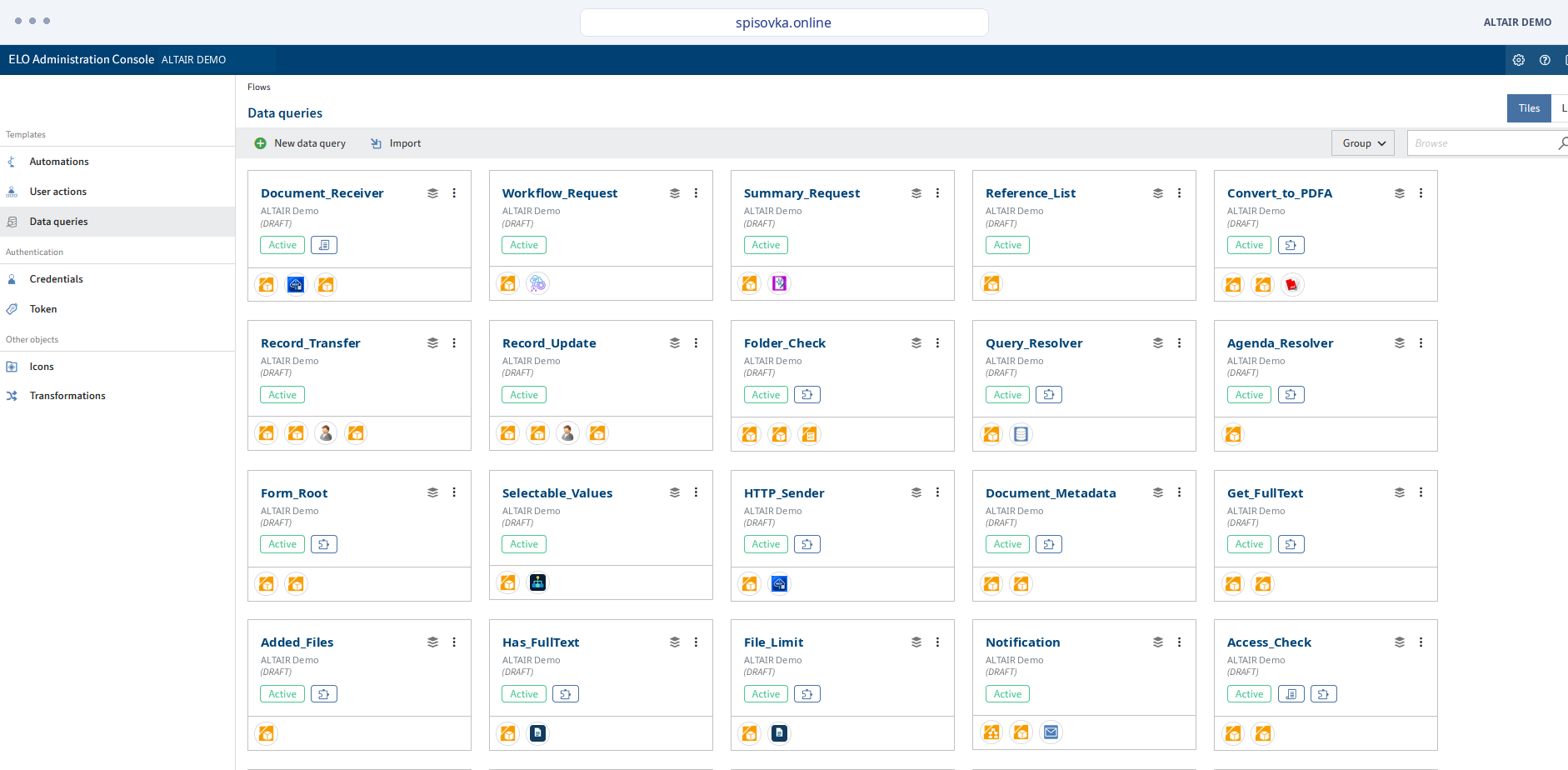
We design forms, metadata, views and document relationships around a user's task and the expected result.
Repeatable operations become managed steps. Interfaces have defined inputs, outputs, access rules and error behaviour.
We track code, configuration and dependencies, distinguishing the ELO platform from custom development. This helps with support and upgrades.
Functions are checked against agreed scenarios and documented. Further changes are prioritised by benefit and operational impact.
We use workflow mainly for user tasks, handovers and decisions. ELO Flows connects automation and integration steps. They can complement each other according to the process and available components.
It supports structured data models and reusable parts through aspects. This helps align data across applications. The model still needs to fit users' work and the interfaces that depend on it.
Licensing and delivery scope are defined in the proposal. Distinguish the ELO platform, custom modules, integrations and third-party services. Demonstrated functions are mapped to specific items when preparing an offer.
Configuration, interfaces, roles, operating procedures and custom-extension documentation, as well as the application. Agree administrator access, backup, support and upgrade arrangements in the requirements.
Response times, service hours, priorities and escalation are defined in the support contract. They reflect the system's importance and responsibilities shared by the customer, ALTAIR and other suppliers.