From intake to completion
We set up receipt, registration, routing and processing. Users see their task and supporting information; administrators can follow the progress and history of each step.

ALTAIR's ELO-based solution connects registration, processing and document applications. We configure the implementation around your organisation's size and processes.
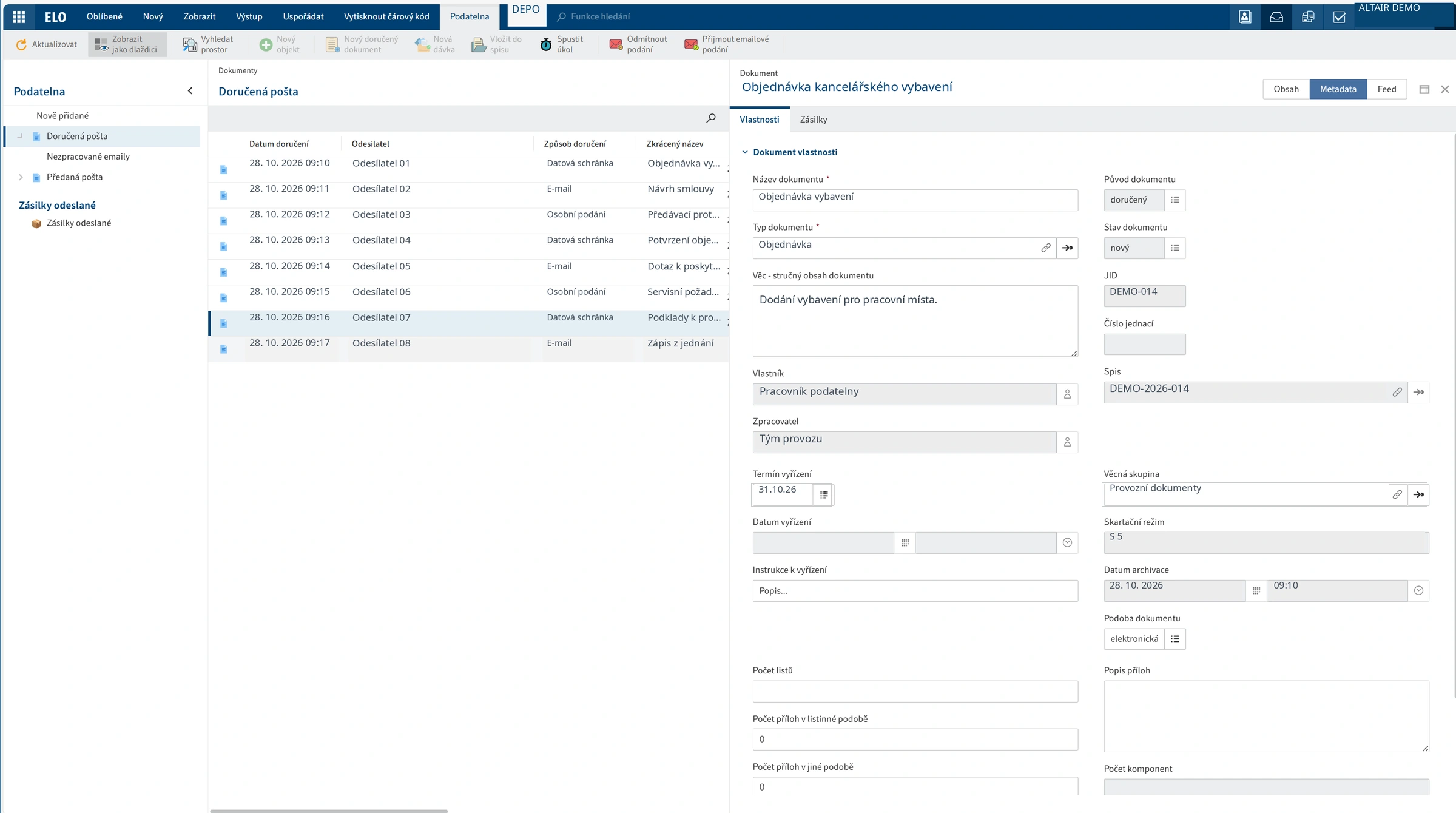
We set up receipt, registration, routing and processing. Users see their task and supporting information; administrators can follow the progress and history of each step.
DEPO can be connected to contracts, invoices, requests and other applications. We define the records management handover and the additional data people need for their work.
We design links to document intake, identities, signing services and business applications. The design includes handover checks and procedures for failed transfers.
Rules and workflows handle repeatable steps. AI can help recognise a document, extract data or suggest a category, with review at the appropriate stage.
Visit spisovka.online for the DEPO product presentation. In a demonstration, we can focus on your document types, applications and deployment needs.
The working concepts are familiar: classification, retention, access, disposal and archival transfer. Legal duties vary by country and sector. English-language content does not imply that Czech eSSL rules apply internationally.

Separate register / Controlled transfer / Electronic records management → Document identity / Metadata and relations / Access and audit. Transfer follows the register rules; it is not unrestricted movement outside the legal regime.
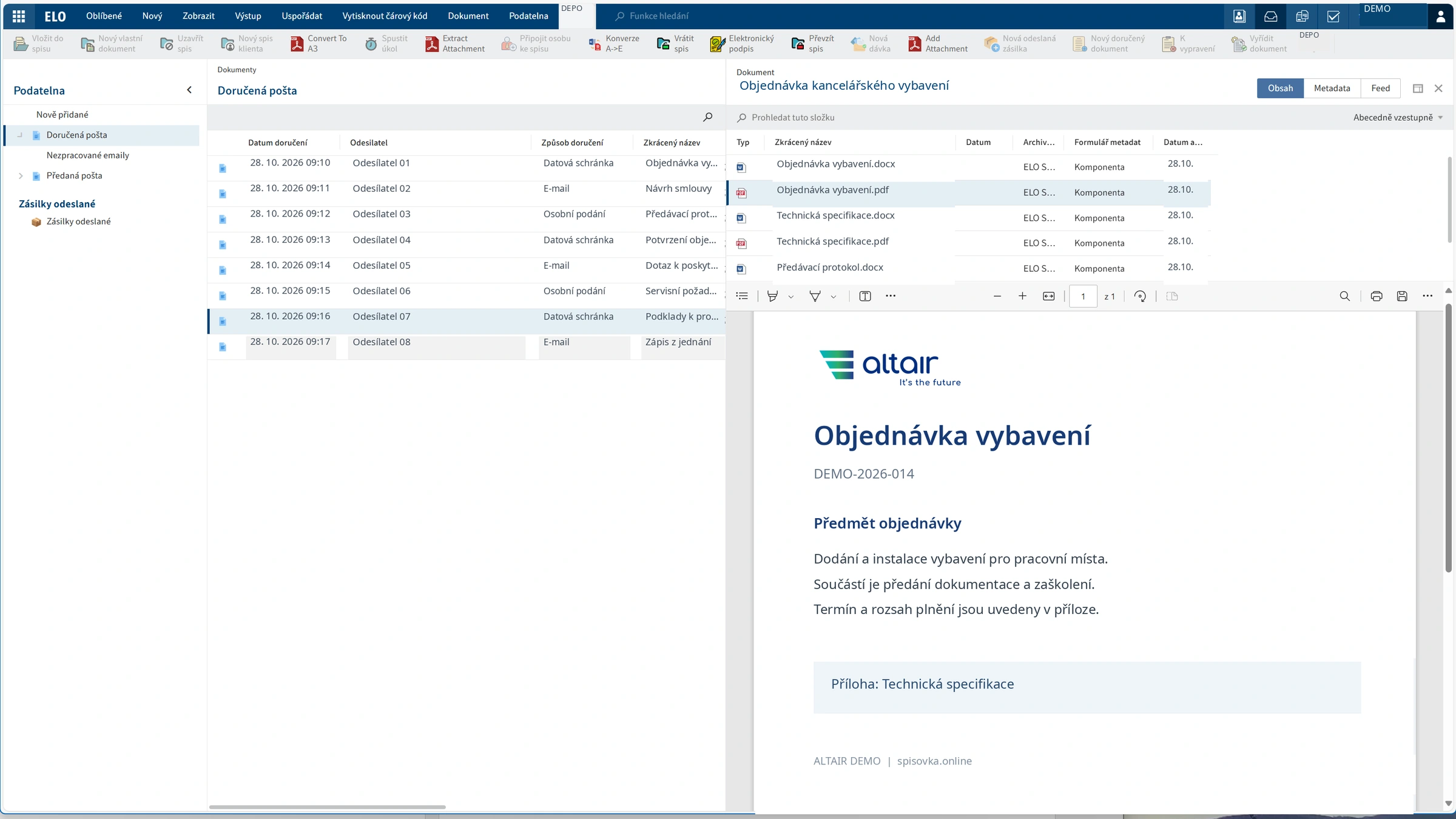
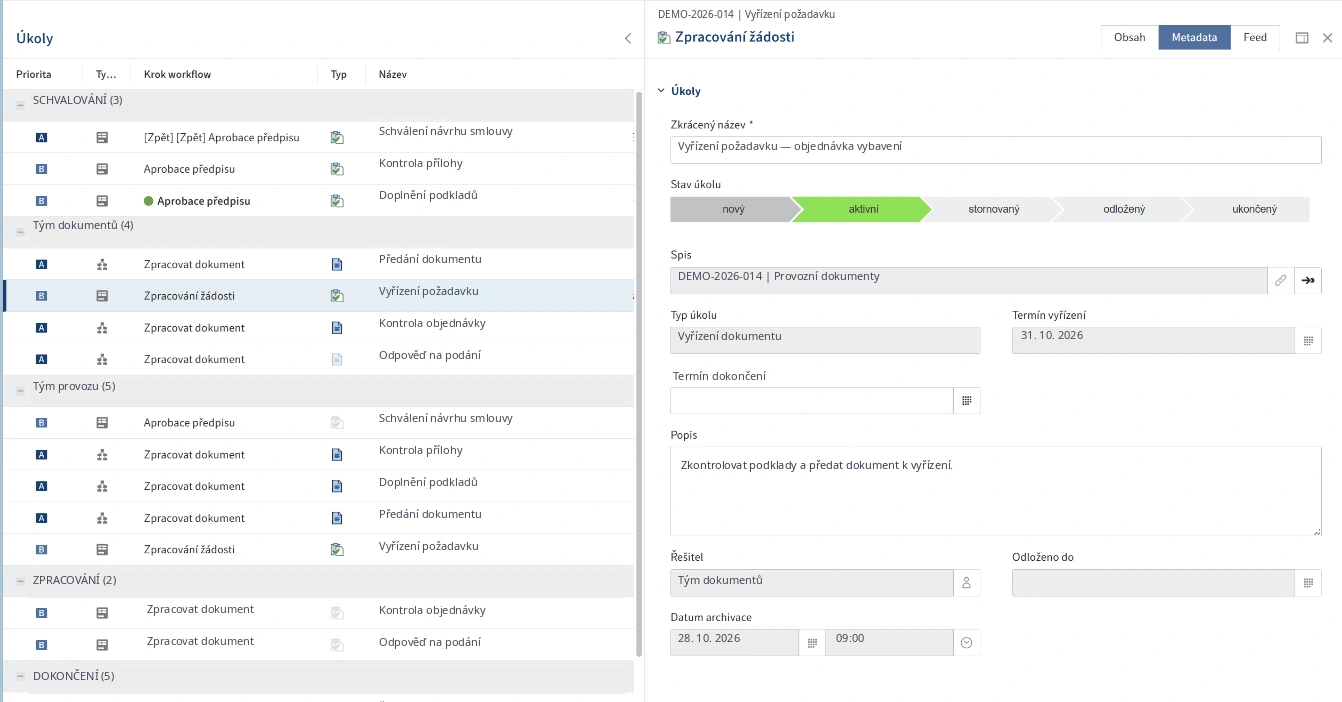
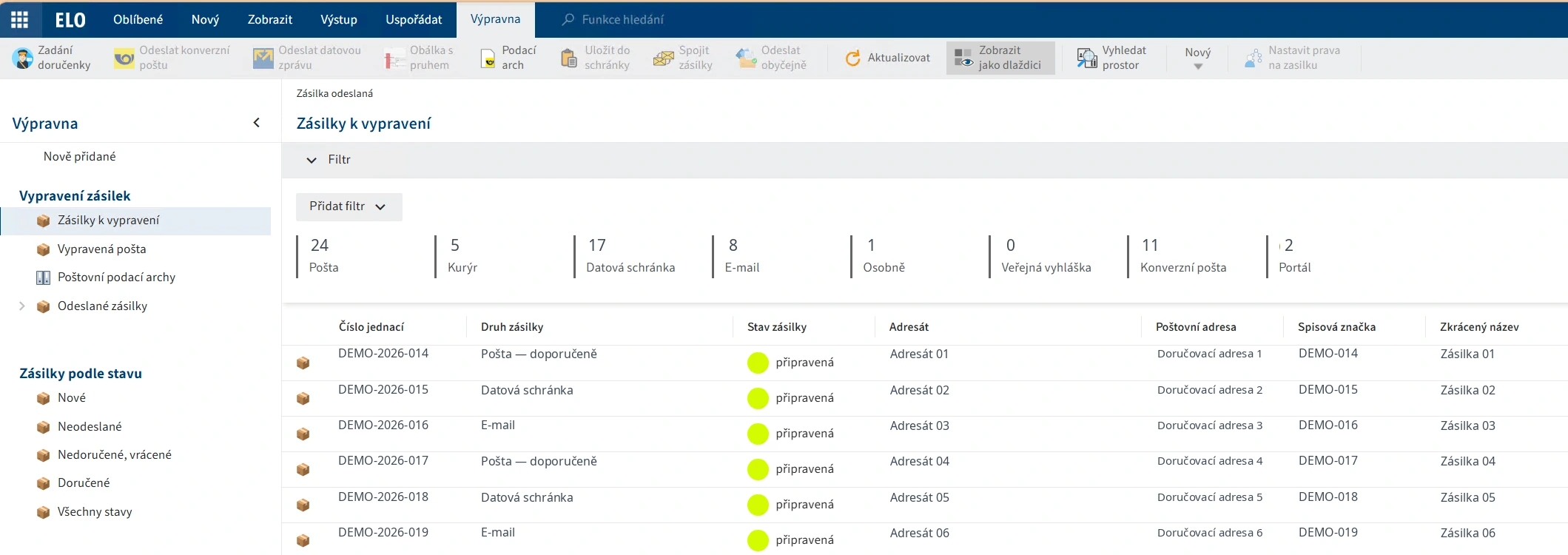
We also prepare smaller implementations. The required registration scope, roles, integrations and operating model matter. A demonstration helps separate essential functions from extensions you do not yet need.
A DMS supports document work and workflows. Czech eSSL also addresses the statutory registration and lifecycle requirements of the organisation concerned. The systems can work together, but a general DMS is not automatically an eSSL.
Define the records, metadata, responsibilities, retention and any link to the main records system. Czech separate registers have specific requirements. Being a standalone application does not by itself establish that legal status.
It assesses a system against specified Czech requirements. Check the actual product, version and validity. It does not confirm that every customer has configured and used the system correctly, or that another country's rules are met.
The visible mark alone does not establish the signer's identity or document integrity. Distinguish appearance, the signing technology and the level required for the transaction, including in a signing workspace.
Consider data sensitivity, availability, integration, operating capacity and cost. Compare backup, recovery and exit arrangements as well. Public-sector projects also need to check the rules for the specific cloud offering.
Applications, users, interfaces, data quality and customisation all matter. A proposal should distinguish licences, implementation, migration and support. A useful schedule also accounts for the customer's preparation and participation.
Licensing and delivery scope are defined in the proposal. Distinguish the ELO platform, custom modules, integrations and third-party services. Demonstrated functions are mapped to specific items when preparing an offer.
Describe one routine process, the people involved and the current problem. An anonymised document and example fields are useful. Sensitive material is not needed for the first conversation; we can agree a separate transfer method.
Obtain data descriptions and exports early, map document and case relationships, and agree how open work will continue. Trial migration and result checks belong in the plan before the old system is retired.
No. Language is separate from legal requirements. Retention, disposal, signatures, access and archival transfer must be designed for the jurisdiction and sector in which the system is used.
No. It is guidance for records management by public authorities. A supplier's software and the organisation's procedures need to be assessed against the requirements that actually apply to the project.